What Grows in the Empty Places: Planting Again After the Season You Lost
🎧 Listen to this episode → 113 | What Grows in the Empty Places: Planting Again After the Season You Lost
The tomatoes are gone. But the twine that held them is still hanging there.
And this week, something new reached out and grabbed hold of it.
The bed that looked like grief
A few weeks ago I stood in front of a garden bed that broke my heart a little. It's where my tomatoes had been — the ones that finally gave out in the heat — and where the tromboncino had climbed and sprawled and spent itself completely. Now it was just bare soil. If you've gardened for any length of time, you know that particular quiet. An empty bed always looks a little like grief.
And empty comes in more than one kind, doesn't it. Sometimes a bed is empty because a season ended exactly the way it was supposed to — the harvest came, the plant gave everything it had, and it's simply, honorably done. And sometimes it's empty because something was lost before its time, pulled out early, gone in a way that still stings.
Your empty places are like that too. Some of them closed gently. Some of them were taken from you.
Here's the mercy: God plants in both kinds of ground.
He does not leave it bare
Isaiah 61 says God gives "a crown of beauty instead of ashes… They will be called oaks of righteousness, a planting of the Lord for the display of his splendor."
A planting of the Lord. Hold that phrase, because you can watch it happen in the dirt.
Planters don't look at empty ground and feel despair. They look at empty ground and see where the next thing goes. The bare bed that looks like an ending to you looks like an opening to Him.
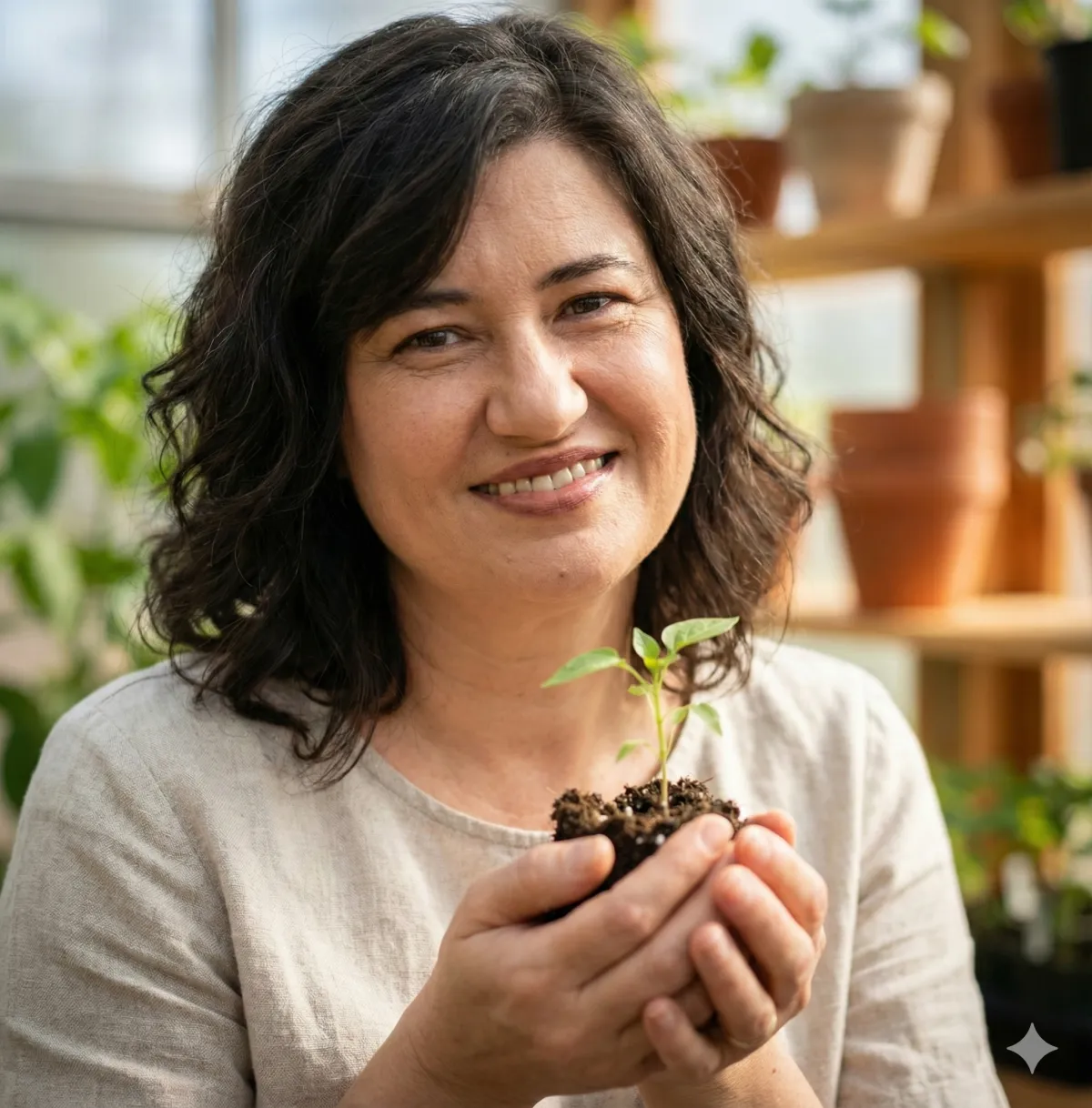
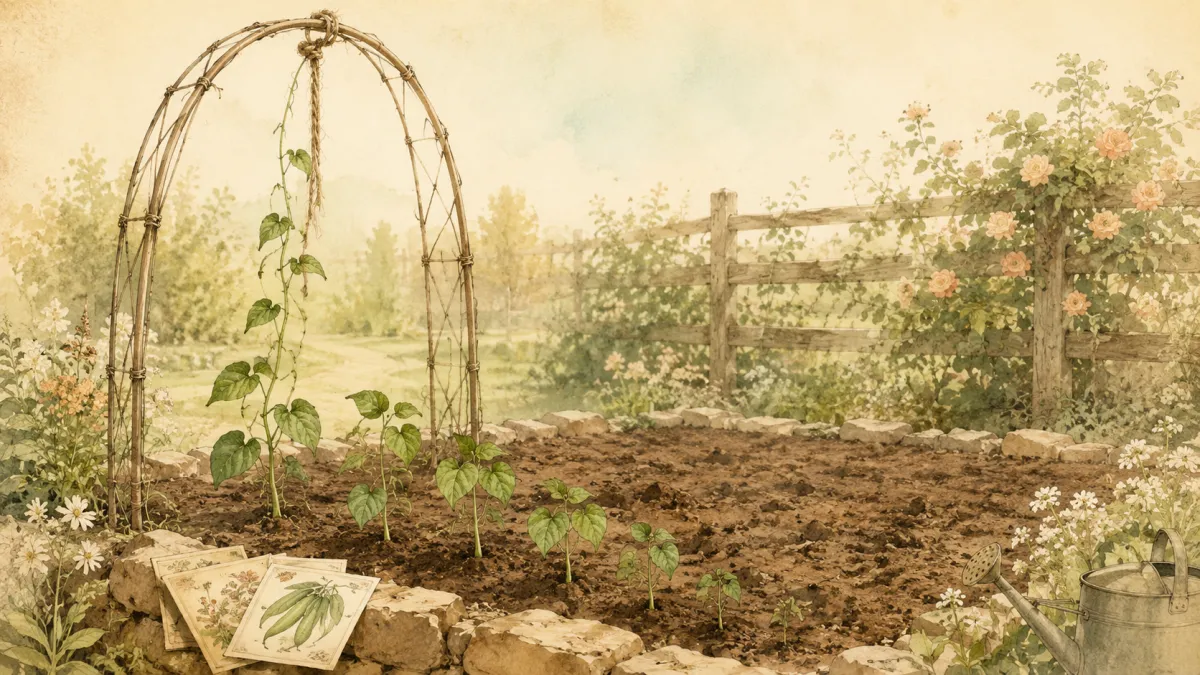
So I planted again. Nothing fancy. Beans went into the bigger pots, the ones with a cattle panel arched over the top like a doorway. Cucumbers along the fence. Lettuce scattered. And sage and oregano seeds I picked up, of all places, at the dollar store.
That part matters more than it sounds like it should. Dollar-store seeds. A little packet by the register, the kind of thing you almost don't bother with. There is nothing impressive about them — and that's rather the point. God has never once needed impressive material to grow something beautiful. He fed a crowd with a boy's sack lunch. He filled a house with oil from a widow's last small jar. He is not standing over your empty places waiting for you to bring Him something worthy enough to plant.
The twine He didn't throw away
Then the beans did something that stopped me.
They were still short — too small to reach the cattle panel arching overhead — so I'd pushed stakes into the pots just to give them something to hold while they grew. And they grabbed those stakes, vigorous and strong, like they'd been waiting their whole lives to climb.
But that isn't the part that undid me. Hanging down from that trellis was old twine — the pieces I'd used to tie up the tomatoes. When I pulled the spent plants, I cut the twine and left it, still knotted at the top, dangling from a season that was already over.
The beans found it. Those young vines reached out and grabbed the loose twine from the plants that were gone, and started climbing it. Pulling themselves up on the leftovers of the very season I'd been grieving.
The new growth climbs on what the last season left behind.
That twine was a remnant. If you'd asked me a week earlier, I'd have called it clutter — a sad little reminder of what didn't make it. But God doesn't waste the remnants. In His economy, the very thing that held your grief becomes the thing that holds your new growth.
You've lived this. The prayer you learned in the hardest year becomes the handhold in the next one. The way a loss taught you to hold things loosely becomes what steadies you when the new blessing comes. The dark year you'd have burned to the ground turns out to be the exact thing another hurting woman can grab onto now, because you've been there and you know the way through.
That's not an accident. That's a God who does not throw away the twine.
The lettuce you can't see
I have to be honest about the rest of that bed.
The cucumbers came up fast. True leaves, climbing the fence, a little more of them every morning. The cucumbers preach an easy sermon — they show you.
The lettuce and the herbs? Nothing. Bare soil where I know I planted seed.
And I'm not worried. Because I know what's happening down there. The lettuce isn't dead; it's waiting. It's too hot, and lettuce is wise enough to sit still in the ground until the season cools enough to come up safely. The herbs are just slow — herbs almost always are.
But I have to decide, every morning I look at that bare stretch, whether I'll believe what I can't see. Because there's a version of me that panics, that assumes bare means barren, that reaches for a trowel to dig up the seed just to check — and in the checking, ruins the very thing that was quietly on its way.
Some mornings, faith is simply keeping your hands off the soil.
Isaiah says God's word goes out like rain and seed and does not return empty. It accomplishes what He sent it for — on His calendar, not yours.
Three ways to plant in an empty place
- Plant something small before you feel ready. Don't wait for the grief to finish. One seed, one prayer, one phone call. The first act of faith in an empty season isn't mourning well — it's putting something in the ground.
- Don't clean up the twine yet. Look at what the hard season left behind — a lesson, a scar, a way of praying — and ask what the new growth could climb on. Leave the handholds up.
- Celebrate the cucumbers, and trust the lettuce. Name one thing you can see growing and thank God out loud for it. Then name one thing you can't see, and refuse to dig it up to check.
If you want the practical side of this — how to actually work a bed that's finished — here's how to replant empty spots for continuous harvests, and solarizing your soil for a fall reset.
One gentle question
What's the one small thing you could plant this week in a place a season left empty?
You don't have to fill the whole bed. Just refuse to let the empty place stay empty.
The empty bed is not the end of the story. It's a planting of the Lord — and He doesn't leave it bare, He climbs the new life on the old twine, and He keeps the hidden seed safe until its season.
🎧 Listen to the full episode → 113 | What Grows in the Empty Places
🌱 Standing in front of an empty place and not sure what to plant first? Rooted Reset is five days, mostly quiet, in your inbox — $25. It's for exactly this season.
Also here whenever you want them: the free Rooted in Grace eBook · the Rooted in Grace paperback and 30-Day Devotional on Amazon · Instagram · Pinterest · Facebook · the garden blog.